Resource-Constrained Autonomous Systems
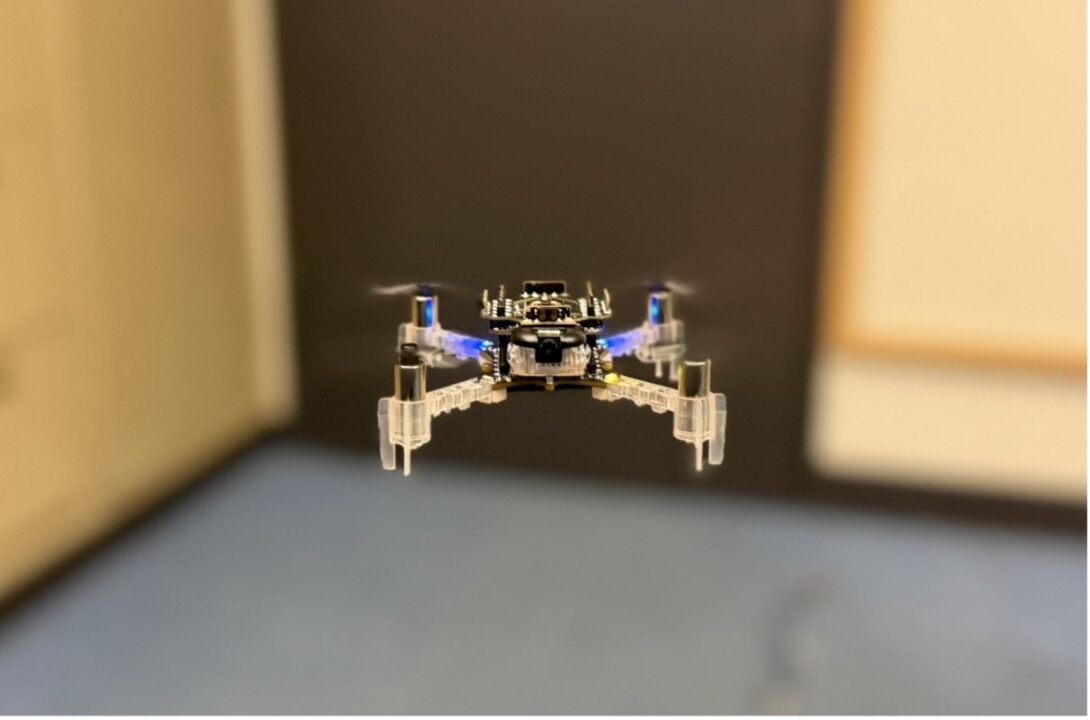
Recent advances in autonomous robots have enabled applications ranging from environmental monitoring and infrastructure inspection to disaster response and precision agriculture. However, deploying intelligence on small robotic platforms remains challenging due to severe limitations in size, weight, power consumption, memory, and onboard computation. Traditional robotics solutions often rely on cloud computing or powerful embedded computers, making them unsuitable for resource-constrained aerial and mobile robots. Our research focuses on developing intelligent autonomy for resource-constrained robotic systems by integrating lightweight perception, embedded artificial intelligence, and autonomous decision making. We investigate efficient vision-based navigation, deep reinforcement learning, vision-language-action (VLA) models, TinyML, and edge AI to enable robots to perceive, plan, and navigate safely using limited onboard computational resources. The long-term goal is to build compact, energy-efficient autonomous systems capable of operating robustly in complex real-world environments without external infrastructure.
Resource-Constrained Autonomous Systems
Our research includes:
- Vision-based autonomous navigation
- Tiny drones and aerial robotics
- Deep reinforcement learning for robotics
- Vision-Language-Action (VLA) models
- TinyML and embedded AI
- Resource-efficient perception algorithms
- Sim-to-Real robot deployment
- Edge intelligence for autonomous systems